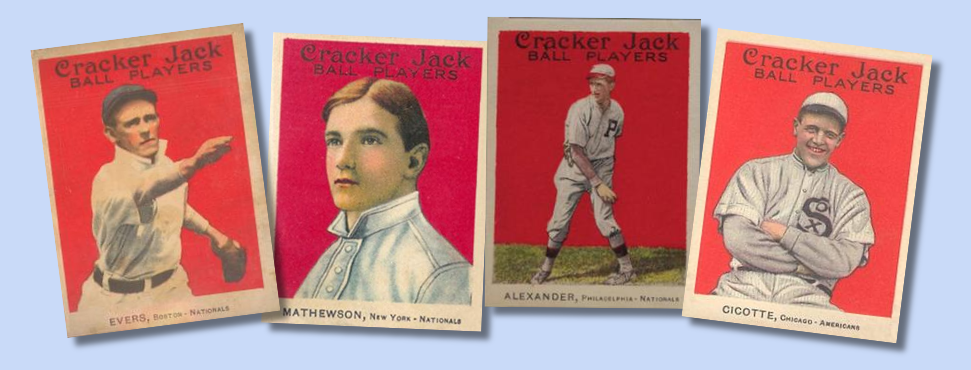
The 1914 and 1915 Cracker Jack units are related sufficient that Jefferson Burdick assigned each the identical E145 designation in his American Card Catalog. Certainly for a lot of Cracker Jack playing cards the one clues as to yr of situation come from the cardboard backs, inverted in 1915 and with denser textual content on the underside that features mail-in presents. For the gamers frequent to each units, even the identical card numbers and bios are used throughout years.
One other key distinction is the scale of the units. The 1914 guidelines has 144 playing cards whereas the 1915 guidelines has 176. Unrelated to the crosswalk, a fast of the 1914 set is that it contains two completely different playing cards of Chicago Whale Rollie Zeider. Presumably, card 116 was issued as a second-series correction of card 60, which confirmed Zeider in a uniform he final wore June 1, 1913.
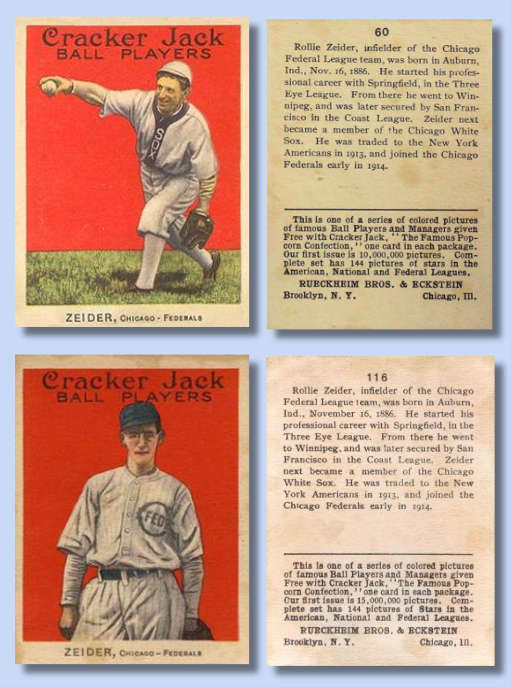
Unsurprisingly, the 1915 set would retain the second Zeider card however not the primary, making Zeider’s card 60 certainly one of solely 5 playing cards from the 1914 guidelines to not maintain its spot, together with numbering, in 1915.
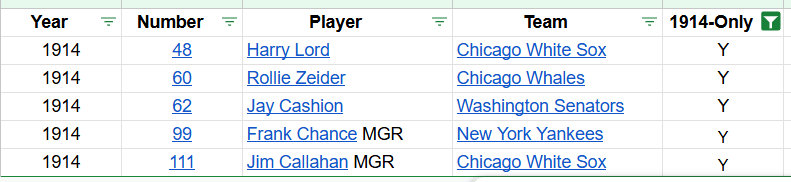
Like Zeider, the opposite topics on the 1914-only checklist have good motive for shedding their spot. Lord barely performed in 1914 and didn’t have a roster spot in 1915 till late Could when he jumped to the Federal League. Cashion equally noticed scant utilization in 1914 and by 1915 was toiling within the American Affiliation. As for Likelihood, he resigned as supervisor of the Yankees in late 1914 and wouldn’t return to the majors till 1923. As for Callahan, the Sox moved him from his subject normal job to the entrance workplace after the 1914 season, making him an uninteresting topic for a baseball card in 1915.
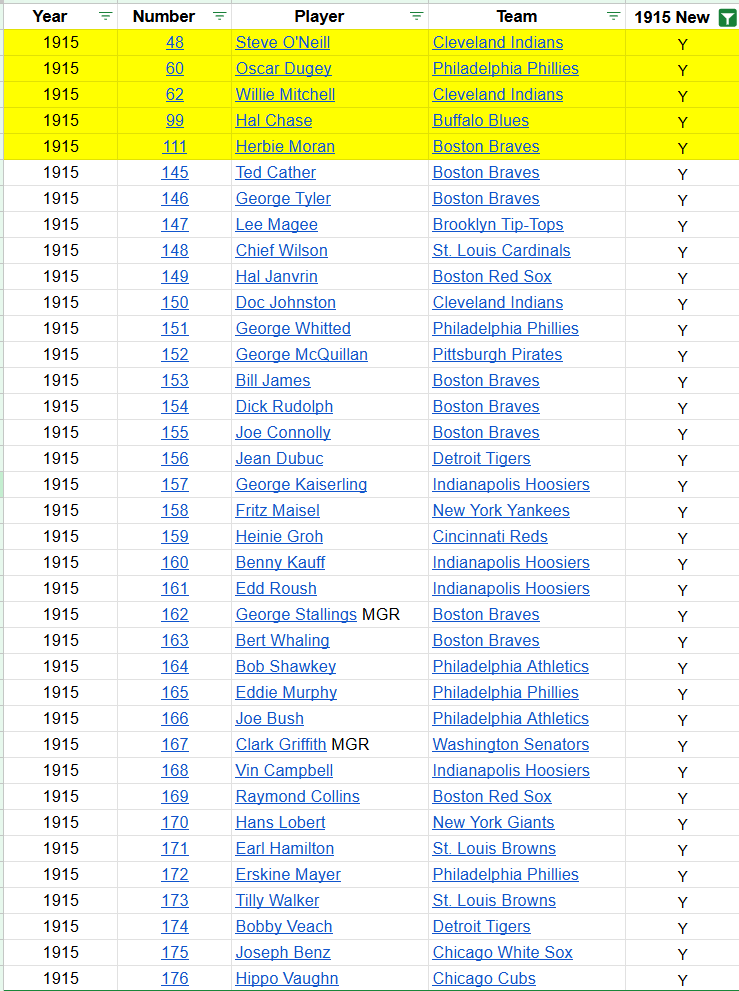
The result’s that the 1915 set included 37 new topics, the 5 playing cards that changed the 1914-only points and the 32 “excessive numbers” from 145-176.
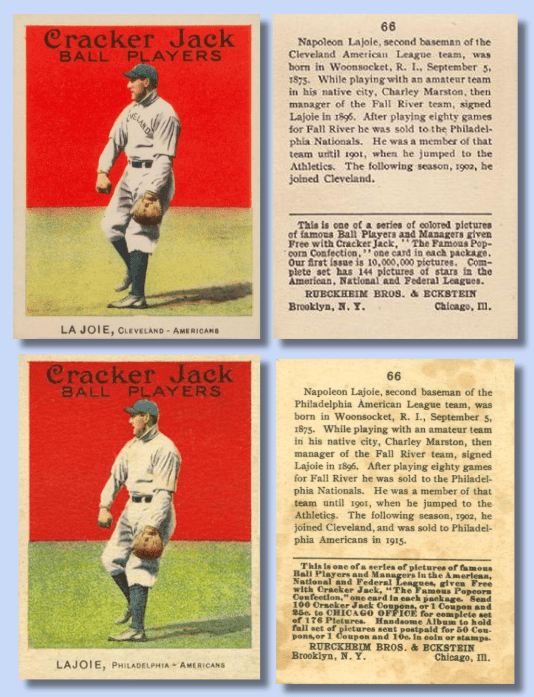
Returning to the 1915 set’s 139 repeated topics, eleven appeared with new groups. Within the case of Nap Lajoie and Sherry Magee, paintings was revised minimally to replicate the updates. In all different circumstances, paintings remained the identical, even when cap and jersey identifiers from the earlier staff had been fairly distinguished.
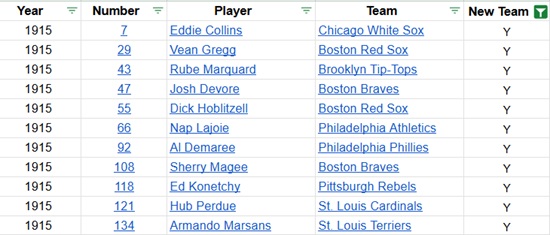
Right here is the entire checklist of all topics showing on new groups within the 1915 set.
The case of Corridor of Fame pitcher Rube Marquard is an uncommon one in that he by no means pitched for the Brooklyn Tip Tops, the staff assigned to his 1915 card. Nonetheless, he did signal with the membership in December 1914. The one drawback was he was already beneath contract with the New York Giants, so the transfer by no means occurred. That mentioned, the Cracker Jack card could have been prophetic in two methods.
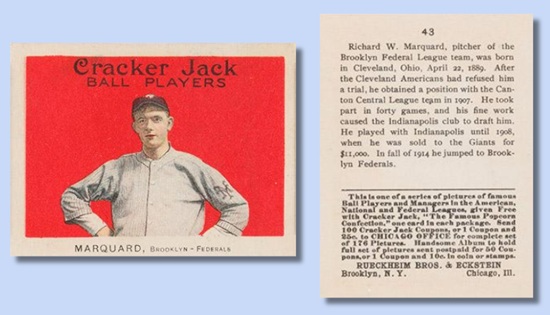
First, the artists left Marquard in his Giants uniform, which proved by chance right for the majority of the 1915 marketing campaign. Second, Marquard did find yourself ending the season with a Brooklyn membership. It simply wasn’t the Tip Tops.
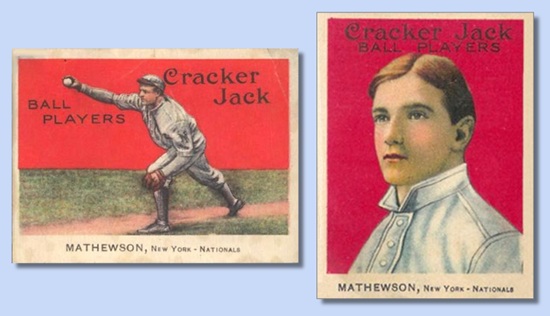
Aside from gamers who modified groups (or no less than had been thought to have), the one different important replace between the 1914 and 1915 units got here with the cardboard of Christy Mathewson, which curiously switched from an motion pose in 1914 to a portrait in 1915.
For collectors keen on pursuing the similarities and variations throughout the 2 Cracker Jack units additional, right here is my Google Sheet. Let me know if you happen to discover something attention-grabbing.

Trending Merchandise