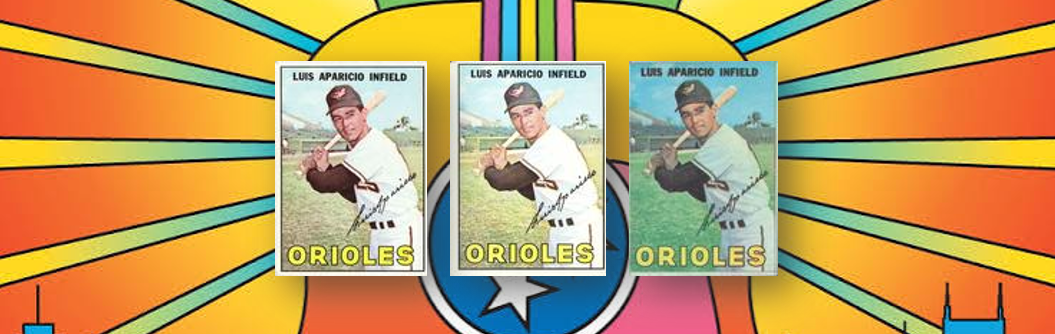
With good cause the last decade of Peace and Love™ has been the topic of numerous books, theater productions, and documentaries. Nonetheless, there’s one vital element concerning the last decade that has by no means acquired its correct due. The Nineteen Sixties, in spite of everything, had been the one decade by which internationally minded collectors may full Topps “rainbows” spanning the USA, Canada, and Venezuela. (Sticker collectors would possibly argue in any other case, however I’m going strictly with playing cards right here.)
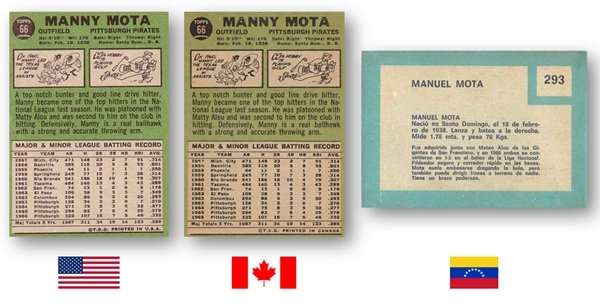
For instance, listed below are the US, Canadian, and Venezuelan variations of Manny Mota’s 1967 Topps card.
There may be little to differentiate the fronts of this Manny Trio 😉 aside from variations in paper inventory and the Venezuelan card’s smaller borders, however the backs make the job a lot simpler. The place the tiny copyright line on the Topps card reads “T.C.G. Printed in U.S.A.” the copyright on the O-Pee-Chee proudly proclaims “T.C.G. Printed in Canada.” As for the Venezuelan card, no magnifying glass is required.
Now this subsequent half is what separates the informal collector from you, the reader of the SABR Baseball Playing cards weblog! Whereas others would possibly shortly presume they will chase a world rainbow of any participant, any 12 months of the last decade, you understand such rainbows are pretty uncommon. Not fairly unicorn uncommon however positively not commonplace.
The primary constraint comes from the years the varied non-US units had been issued. O-Pee-Chee’s first mirroring of Topps flagship was not till 1965 whereas the Venezuelan units had been restricted to the even years of the Nineteen Sixties and 1967. (There’s a story to the 1967 model, which was possible achieved with none involvement from Topps.) No Venn diagram is required then to infer that 1966, 1967, and 1968 supply the one rainbow potentialities.
A second constraint comes from the diminished checklists the non-US units carried, as proven on this desk.
Variety of Playing cards

You’ll discover an asterisk in that 1967 Venezuelan quantity. As a result of 138 of the playing cards are Venezuelan Winter Leaguers and 50 of the playing cards are retired greats (Retirados), the variety of Topps flagship clones is just 150. (Extra on this later.)
As a fast apart, it’s value mentioning that aside from the 1967 Venezuelans the playing cards within the 1966-68 non-US points are hardly random. Their checklists correspond precisely to the primary N playing cards on the Topps U.S. checklists, the place N is 196 in Canada and 370 in Venezuela.
Cardboard Crosswalk: U.S., Canadian, and Venezuelan Units (1966-68)

The result’s that had been you to wonder if a three-country rainbow is perhaps potential for a favourite participant, the reply for 1966 and 1968 is an easy YES, supplied he’s among the many first 196 playing cards on the Topps guidelines, however an “It’s sophisticated” if we’re speaking 1967.
Because the diagram under reveals (glasses required), the distribution of the 150 clones within the Venezuelan problem seem to have been scattered slightly haphazardly throughout the 1967 Topps guidelines.

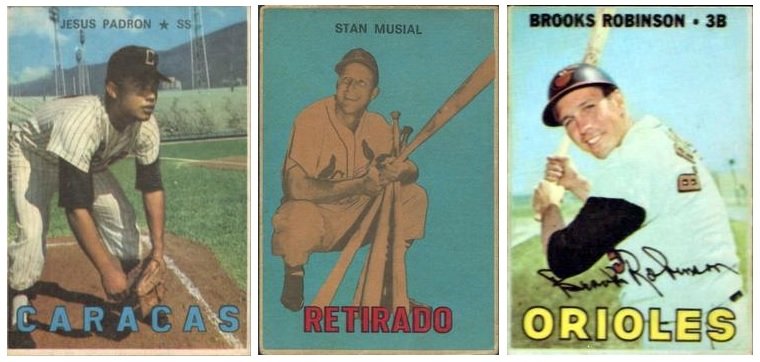
In actual fact, this was not the case in any respect. Card choice was a lot nearer to what I’ll name a “better of” collection of high U.S. stars and Latin American main leaguers. For instance, the primary six playing cards had been Luis Aparicio, Vic Davalillo, Cesar Tovar, Mickey Mantle, Carl Yastrzemski, and Frank Robinson. As such, had been I pressed to reply whether or not a selected card supported a 1967 rainbow, I’d ask these three questions in return.
- Was the cardboard numbered 196 or under within the Topps set? (This ensures a Canadian counterpart.)
- Does the cardboard depict a star participant?
- Does the cardboard depict a Latin American participant?
If the solutions to the primary query and even one of many subsequent two had been YES, then a rainbow can be very possible. Nonetheless, so long as we’re speaking 1967, the distinctive development of the Venezuelan set is comparable to we will do even higher than a triple rainbow.
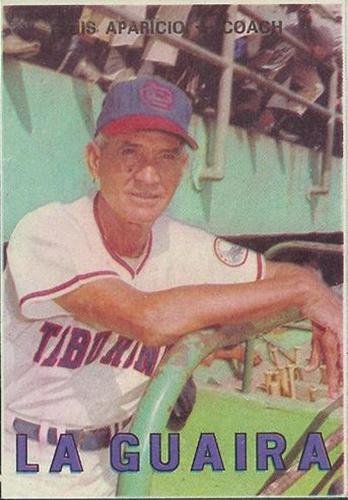
There are two gamers, our true unicorns, for whom a quadruple rainbow was potential in 1967, due to the Winter Leaguer portion of the Venezuelan guidelines. Not coincidentally, each had been home-grown Venezuelan ballplayers, and never coincidentally the pair led off the most important league portion of the Venezuelan guidelines. (Third on that guidelines was Venezuelan-born Cesar Tovar, however his Topps card, numbered 317, put him out of attain of the OPC guidelines.)

And in case you actually needed to go to city with that first group you might even throw in a Luis Aparicio, Sr!
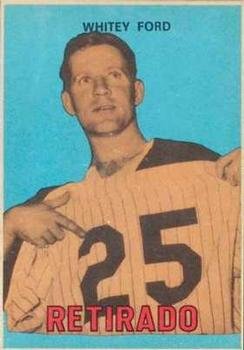
As a ultimate be aware, I’ll supply that one other number of quadruple rainbow was nearly potential in 1967. Pitching in his ultimate season, Yankees legend Whitey Ford cracked each the Topps and O-Pee-Chee checklists. What’s extra, he even cracked the Venezuelan guidelines with a Retirado card. Sadly, the Retirado is Ford’s solely card within the Venezuelan set. (As an apart, it additionally helps date the difficulty.)
On my finish, as a Manny Mota collector, I’m at the moment engaged on the pinch-hitting legend’s two rainbows (1966, 1967). How about you? Has this text persuaded you to chase a rainbow of your personal, whether or not for bragging rights or just to recollect a time when the US and Canada had been BFFs and Brooklyn was residence to Topps slightly than the Venezuelan president. Certain peace and love would possibly really feel like antiquated notions immediately, however who higher to reside up to now than us card collectors!

Trending Merchandise